Summary: Online tools have fundamentally transformed how individuals and teams work by automating repetitive tasks, centralizing communication, and enabling real-time collaboration across distances. From project management platforms and AI writing assistants to time trackers and cloud storage solutions, digital productivity tools eliminate friction in daily workflows, reduce cognitive overload, and empower professionals to focus on high-impact work. Whether you’re a freelancer managing multiple clients or a large enterprise coordinating global teams, leveraging the right online tools is no longer optional — it’s the foundation of competitive, sustainable productivity in the modern workplace.
Outline:
- What Does “Productivity” Really Mean in the Digital Age?
- How Online Tools Improve Productivity: The Core Mechanisms
- Categories of Online Productivity Tools and Their Impact
- Online Tools for Remote Work Productivity
- The Psychology of Productivity and How Tools Support It
- How Online Tools Improve Productivity: The Complete Guide for 2026
- Choosing the Right Online Tools: A Strategic Framework
- Future Trends: Where Online Productivity Tools Are Heading
- Conclusion: Working Smarter Starts With the Right Tools
In a world where attention is the scarcest resource and deadlines never stop, professionals everywhere are asking the same question: how do I get more done without burning out? The answer lies not in working harder, but in working smarter — and that means understanding exactly how online tools improve productivity in every corner of your work life.
This guide covers everything: the psychology behind digital productivity, the categories of tools that matter most, real use cases, LSI keywords, NLP-driven insights, and actionable strategies you can apply today.
What Does “Productivity” Really Mean in the Digital Age?
Redefining Productivity Beyond Busyness
Productivity is not about being busy — it’s about producing meaningful output relative to the time and energy invested. In the digital age, productivity is measured by outcomes, not hours. Online tools shift the equation by replacing manual, repetitive effort with automated, intelligent processes.
Key NLP-related concepts here include: task efficiency, cognitive load reduction, output optimization, and workflow automation — all of which are addressed directly by modern productivity software.
The Productivity Gap: Why Most People Struggle
Research consistently shows that knowledge workers spend nearly 60% of their time on “work about work” — things like searching for files, attending status meetings, and chasing approvals — rather than doing skilled, strategic work. This productivity gap is exactly where online tools intervene most powerfully.
How Online Tools Improve Productivity: The Core Mechanisms
Automation of Repetitive Tasks
One of the most direct ways online tools improve productivity is through task automation. Tools like Zapier, Make (formerly Integromat), and Microsoft Power Automate allow users to build workflows that connect apps and trigger actions automatically — no coding required.
For example, a marketing manager can automatically send a Slack notification every time a new lead fills out a form, add them to a CRM, and assign a follow-up task — all without lifting a finger. This kind of workflow automation software saves hours every week.
Centralized Communication and Collaboration
Fragmented communication is one of the biggest productivity killers in any organization. When teams rely on a chaotic mix of emails, WhatsApp messages, and verbal conversations, critical information gets lost. Online collaboration tools like Slack, Microsoft Teams, and Google Workspace solve this by centralizing communication into organized, searchable channels.
The result? Faster decisions, fewer misunderstandings, and a dramatic reduction in time wasted looking for context.
Real-Time Document Editing and Cloud Storage
Gone are the days of emailing document versions back and forth. Cloud-based productivity tools like Google Docs, Notion, and Dropbox Paper allow multiple team members to work on the same document simultaneously. Changes are tracked, versions are saved, and nothing is ever truly lost.
This real-time collaboration capability is especially critical for remote and hybrid teams, who rely entirely on digital infrastructure to stay aligned.
Time Management and Focus Enhancement
Online tools also improve productivity by helping individuals manage their most finite resource: time. Applications like Toggl Track, RescueTime, and Clockify provide detailed time-tracking reports that reveal where hours actually go — which is often very different from where people think they go.
Paired with focus tools like Focus@Will, Forest, or the built-in Focus Modes in operating systems, these tools help users protect deep work sessions from distraction.
Categories of Online Productivity Tools and Their Impact
Project Management Tools
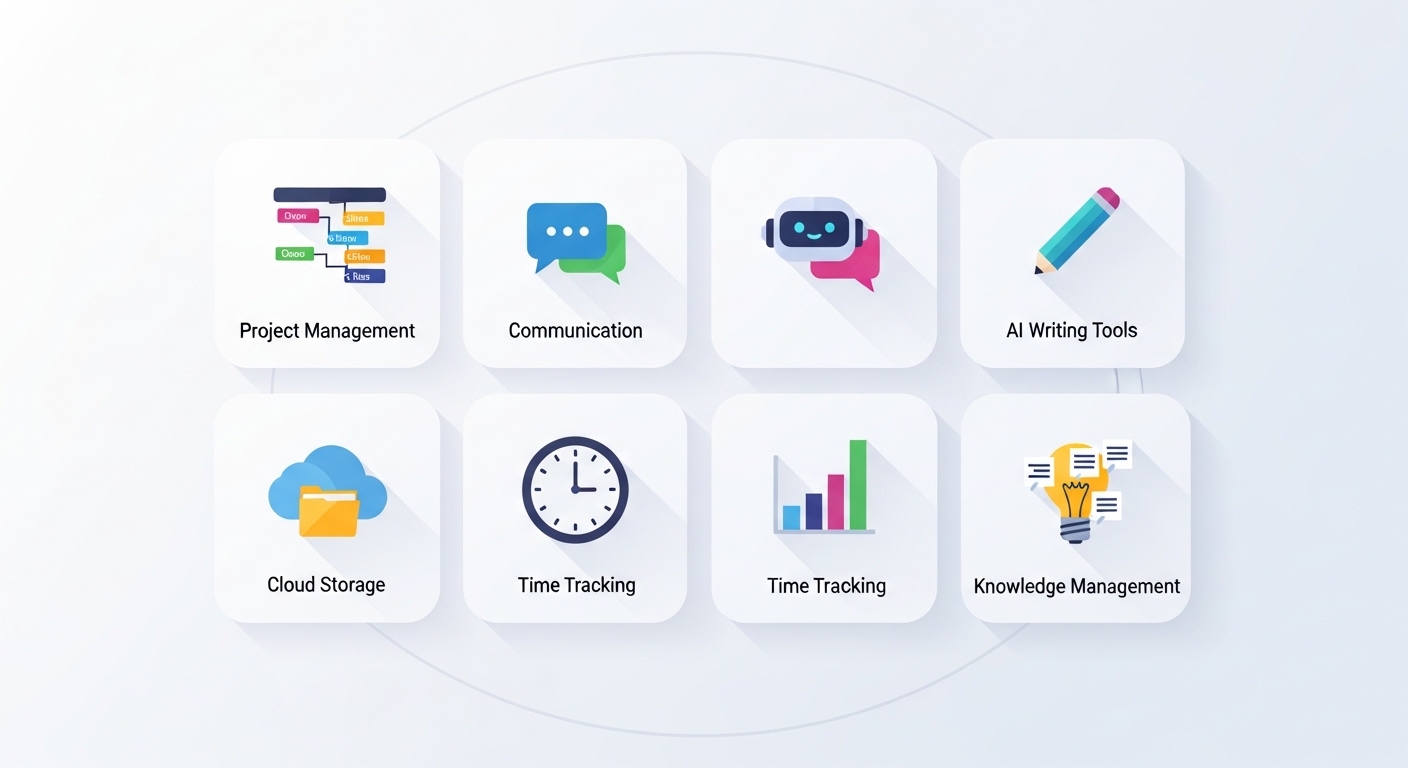
Project management software is arguably the most impactful category for team productivity. Platforms like Asana, Trello, Monday.com, and ClickUp give teams a shared visual workspace where tasks, deadlines, owners, and progress are transparent to everyone.
These tools eliminate the need for lengthy status update meetings. Instead, a quick glance at a board tells every team member exactly what’s done, what’s in progress, and what’s blocked.
Communication and Messaging Platforms
Beyond email, team messaging tools like Slack and Microsoft Teams have redefined workplace communication. Features like threaded conversations, file sharing, video calling, and third-party app integrations make these platforms true productivity hubs rather than simple chat apps.
According to Slack’s research on workplace productivity, teams using structured communication platforms report significantly faster response times and higher satisfaction with collaboration quality.
AI-Powered Writing and Content Tools
The rise of AI productivity tools has introduced a new dimension of output acceleration. Tools like ChatGPT, Claude, Jasper, Grammarly, and Copy.ai help professionals draft emails, write reports, generate ideas, and proofread content in a fraction of the usual time.
For content marketers, SEO specialists, and business writers, AI writing assistants have become indispensable. They reduce writer’s block, maintain consistency in tone, and help non-native speakers communicate with confidence.
File Storage and Document Management
Cloud storage solutions such as Google Drive, OneDrive, Dropbox, and Box ensure that files are accessible from any device, at any time, by any authorized team member. This eliminates the classic bottleneck of “I need that file, but it’s on my office computer.”
For businesses with compliance requirements, enterprise-grade document management systems add version control, audit trails, and access permissions — turning storage into a strategic asset.
Time Tracking and Productivity Analytics
Understanding how time is spent is the first step toward spending it better. Time tracking software provides granular data on task durations, project profitability, and personal focus patterns.
Freelancers use tools like Toggl or Harvest to generate accurate client invoices. Managers use Hubstaff or Time Doctor to monitor team activity and identify workflow bottlenecks. The analytics these tools produce turn vague feelings of “busyness” into clear, actionable data.
Note-Taking and Knowledge Management
The modern professional generates and consumes enormous amounts of information daily. Digital note-taking tools and knowledge management systems like Notion, Obsidian, Roam Research, and Evernote act as external brains — capturing ideas, organizing reference material, and surfacing relevant knowledge when you need it.
The concept of a Personal Knowledge Management (PKM) system has gained significant traction among high performers who use these tools to build interconnected networks of notes that compound in value over time.
Online Tools for Remote Work Productivity

The shift to remote and hybrid work has made online productivity tools not just useful but essential. Without the natural coordination that happens in a shared office, remote teams must be intentional about how they communicate, collaborate, and stay accountable.
If you’re building or optimizing a remote work stack, check out our comprehensive Best Tools for Remote Workers (2026 Guide) — it covers everything from video conferencing solutions to async communication tools specifically curated for distributed teams.
Virtual Meeting and Video Conferencing Tools
Video conferencing software like Zoom, Google Meet, and Microsoft Teams has become the backbone of remote team communication. But productivity-focused teams go further — they use tools like Loom for async video messaging, which eliminates the need for synchronous meetings when a quick video walkthrough will do.
Virtual Whiteboards and Brainstorming Tools
Creative collaboration doesn’t have to suffer in a remote environment. Digital whiteboard tools like Miro, FigJam, and MURAL replicate the spontaneous ideation of in-person workshops in a virtual space. Teams can brainstorm, map processes, run retrospectives, and co-design in real time — regardless of geography.
Password Managers and Security Tools
Productivity also means removing friction from secure access. Password management tools like 1Password, Bitwarden, and LastPass ensure that team members can access the tools they need without insecure workarounds or wasted time recovering forgotten credentials.
The Psychology of Productivity and How Tools Support It
Reducing Cognitive Load
Cognitive load refers to the mental effort required to process information and make decisions. When your brain is cluttered with things to remember, track, and manage, creative and strategic thinking suffer. Online tools offload this burden — your project management app remembers your deadlines, your calendar tool schedules your meetings, and your password manager handles your credentials.
This externalization of cognitive burden is one of the most underrated benefits of digital tools.
Creating Accountability Structures
Humans are wired to perform better when they know others can see their progress. Accountability features built into productivity tools — like task assignments, due dates, activity feeds, and progress dashboards — create gentle but powerful social pressure that drives follow-through.
Building Productive Habits Through Consistency
Tools like Habitica, Streaks, and goal-tracking modules within Notion or ClickUp help users build and maintain productive habits through gamification and visual progress tracking. The consistency created by these tools compounds over time, producing dramatically better long-term output.
Choosing the Right Online Tools: A Strategic Framework
📸 [IMAGE PLACEMENT: Insert a decision-flowchart image here for choosing productivity tools — see Image Prompt #3 below]
Assess Your Workflow Bottlenecks First
Before downloading another app, identify where your workflow actually breaks down. Is it communication? Task tracking? File access? Focused work time? The best tool is the one that solves your specific bottleneck — not the most popular tool on Product Hunt.
Prioritize Integration Over Features
A tool that plays well with your existing stack is more valuable than one with impressive standalone features. Always check what integrations a tool supports before committing. A seamlessly connected ecosystem is dramatically more productive than a collection of powerful but isolated apps.
Start Small, Then Scale
Tool overload is real. Introducing too many platforms simultaneously creates confusion and adoption resistance. Start with one or two tools that address your most critical pain points, build habits around them, and then expand your stack thoughtfully.
Measure the Impact
True productivity improvement is measurable. Set baseline metrics — time spent on tasks, project turnaround time, team response rates — before introducing a tool, and measure again after 30-60 days of consistent use. Let data guide your tool decisions.
Future Trends: Where Online Productivity Tools Are Heading
AI Integration Across All Categories
Artificial intelligence is being embedded into every category of productivity tools. AI-powered meeting summaries (Otter.ai, Fireflies.ai), smart task prioritization (Motion, Reclaim.ai), and generative content assistance are just the beginning. The future of online productivity tools is one where AI handles the routine, freeing humans for the irreplaceable.
Unified Work Operating Systems
The trend is moving away from individual tools and toward all-in-one work operating systems. Platforms like Notion, ClickUp, and Monday.com are rapidly expanding to cover project management, documentation, communication, CRM, and analytics under one roof — reducing the complexity of multi-tool stacks.
Asynchronous-First Work Culture
As global teams become the norm, the future of productivity is async-first — meaning work is designed to happen without requiring real-time presence. Tools that support async collaboration (Loom, Notion, Linear, Basecamp) will continue to gain prominence over those that demand synchronous interaction.
Conclusion: Working Smarter Starts With the Right Tools
Online tools improve productivity not through magic, but through intelligent design that aligns with how humans work best. They reduce wasted effort, sharpen focus, enable collaboration, and generate the data needed to continuously improve. Whether you are a solopreneur optimizing your daily schedule or an enterprise streamlining operations across continents, the strategic adoption of digital productivity tools is one of the highest-ROI investments you can make.
The key is intentionality: choose tools that solve real problems, integrate them into your workflow thoughtfully, and measure their impact consistently. The right digital toolkit doesn’t just make you more productive — it transforms how you work entirely.